
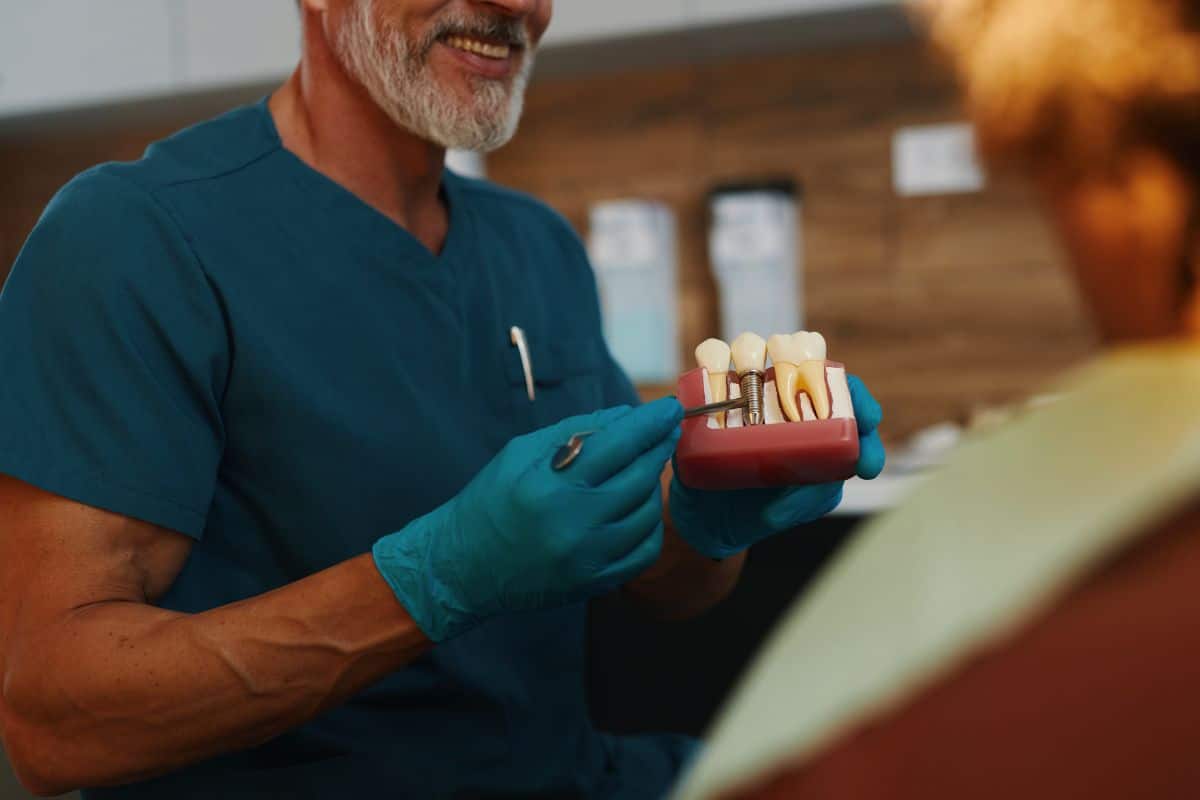
Have you ever considered a dental implant to replace a missing tooth? Dental implants boast some of the highest success rates in restorative dentistry, with many studies showing survival rates of 90% to 95% over a 10-year period (Mission Implant Center, n.d.). They offer a permanent, natural-looking solution that lasts decades with proper care.
But what happens when your jawbone isn’t quite ready to support this remarkable fixture? That’s where bone grafting comes in. If you’ve been told you have insufficient bone density, don’t worry—this procedure is often the key to making your dream smile a reality. Let’s break down this crucial step in achieving long-term implant success.
Why bone matters for dental implants
Dental implants are titanium posts that integrate with living bone (osseointegration). If there’s not enough bone volume or quality at the implant site, the implant can’t properly anchor, which raises the risk of failure, poor esthetics, or a compromised bite. That’s why surgeons often add bone (graft) before or during implant placement — to rebuild volume, shape the ridge, or lift the sinus floor in the upper jaw.
How common is bone grafting for implants?
Studies show that bone grafting is very common. Large clinic series and reviews report roughly about half of implant sites require some form of bone grafting during planning or placement — figures around 50–58% are frequently cited.
How quickly bone is lost after extraction (and why timing matters)
After a tooth is removed, the socket remodels fast: human re-entry studies show horizontal bone loss of ~29–63% and vertical loss of 11–22% in the first 6 months, with the most rapid resorption in the first 3–6 months. One older clinical paper also found an average loss of about 50% of alveolar ridge width after extraction. That shrinkage is a significant reason many extraction sites later need grafting to place an implant in the ideal position.
Types of bone graft materials
Clinically used categories are:
- Autografts — bone harvested from the patient (gold standard biologically).
- Allografts — processed human donor bone.
- Xenografts — animal-derived (e.g., bovine) bone substitutes.
- Alloplasts / synthetics — man-made calcium/phosphate materials.
- Growth factors/biologics — e.g., BMPs or platelet concentrates, used to stimulate bone formation.
Each option has trade-offs (availability, cost, donor-site morbidity, handling, and speed of new bone formation). Recent reviews summarize these classes and their typical clinical uses.
Do grafts improve implant success?
Good news: grafted sites can achieve implant survival comparable to non-grafted (pristine) bone in many settings. Systematic reviews and cohort studies report implant survival rates after augmentation commonly in the 84–97% range, depending on graft type, site, and follow-up time. One review found that implants placed with ridge augmentation had an overall survival near 94%, while dental implants in Scottsdale placed without augmentation in controls were around 97.6%; the difference was not statistically significant in that analysis. Other reviews of onlay grafts report success ranging from 73% to 97% (most studies >84%). Bottom line: augmentation generally produces predictable long-term outcomes when appropriately performed.
Risks and complications
Like any surgical procedure, bone grafting carries risks. The most commonly reported complications include membrane or graft exposure, infection, donor-site discomfort (if autograft used), and resorption or partial loss of grafted material. Reported complication rates vary by technique: guided bone regeneration (GBR) and block grafting have different profiles; some analyses show complication rates ranging from (procedure-dependent) and higher rates for complex vertical augmentations. Careful case selection and technique lowers these risks.
Clinical scenarios where grafting is commonly used
- Ridge preservation after extraction to limit collapse and preserve future implant sites.
- Horizontal ridge augmentation is used when the jaw is too narrow for the implant diameter.
- Vertical augmentation when height is deficient (more complex, higher complication rates).
- Sinus augmentation (sinus lift) occurs in the upper back jaw when the sinus is pneumatized and the bone is thin.
- Immediate vs. staged approach: Sometimes, implants are placed simultaneously with grafting; other times, grafting is done first, allowed to heal, and implants are placed later.
Practical considerations
- How common? Expect about half of implant patients to be recommended some grafting.
- Cost and time: Grafting adds cost and healing time (weeks to months), depending on the scope. Insurance coverage varies.
- Material choice: Many U.S. clinicians favor allografts or xenografts for convenience and reduced donor morbidity; autografts are used when rapid, robust bone formation is needed. Trends in material use shift over time.
What to expect
- Minimal to moderate discomfort; pain is usually manageable with standard meds.
- If bone is harvested from another site (rare intraoral or extraoral donor sites), expect additional soreness there.
- Healing time before implant loading varies (2–9 months commonly, depending on procedure).
- Your surgeon will monitor graft integration (clinically and radiographically) before the final prosthesis.
The Bottom Line
Bone grafting is a common, evidence-backed step that enables many successful dental implants by restoring lost bone volume and creating a stable foundation. Although it adds time, cost, and some risk, modern graft materials and techniques allow predictable implant survival rates (often above 90% in many series) when cases are planned and executed appropriately. If your qualified dentist in Scottsdale recommends grafting, it’s usually because it meaningfully improves your implant’s long-term esthetics and function — and the literature supports that decision in most situations.
FAQs
Q1 — How often will I need a bone graft before an implant?
A. Many clinics report roughly 50% of implant cases require some grafting; your exact need depends on how long the tooth has been missing, the bone dimensions, infection history, and your overall health.
Q2 — Can I avoid grafting by getting an implant immediately after extraction?
A. Immediate implants can be successful in select cases, but they don’t eliminate the risk of bone collapse in all patients. Ridge preservation (grafting the socket at extraction) is commonly used to reduce future grafting needs. Discuss options with your surgeon.
Q3 — Does the type of graft material change success?
A. All primary graft materials (autograft, allograft, xenograft, synthetics) are used successfully; choice depends on the defect, patient preference, and clinician experience. Most comparative studies show acceptable outcomes across types when used appropriately.
Q4 — How long does grafted bone take to heal before implant placement?
A. Healing can range from a few months (2–4 months for some socket preservations or specific grafts) to 6–9 months for larger vertical augmentations. Your surgeon will time implant placement based on radiographic and clinical healing.
Q5 — What are the main risks I should know about?
A. Possible graft-related complications are membrane/graft exposure, infection, partial graft loss, and donor-site soreness (if autograft). Rates vary by technique; following post-op instructions and choosing an experienced surgeon helps reduce risks.