
Let’s be honest: no one wakes up excited for a dental appointment, especially when you’re dealing with a tooth that’s seen better days. Whether it was a rogue popcorn kernel, a sports injury, or just years of “I’ll get to it later” catching up with you, severe tooth damage can feel like a blow to your confidence (and your diet!).
But here’s the good news: you aren’t alone, and you certainly aren’t out of options. In 2026, the technology behind dental crowns and implants is more advanced than ever. Did you know that over 150 million Americans are currently missing at least one tooth? (Source: Impressions Dental). Whether you’re looking to save a tooth or replace one, modern dentistry has a high-tech solution waiting for you.
Let’s dive into how these two powerhouses of restorative dentistry work, what the data says about their success, and which one might be the right “fit” for your smile.
Why Severe Tooth Damage Happens
Before we dive into treatments, it’s worth understanding how common severe damage is:
- Nearly 90% of U.S. adults ages 20–64 have experienced some form of tooth decay over their lifetime.
- About 120 million Americans are missing at least one permanent tooth, and 36 million have lost all their teeth.
- Complete tooth loss is most common in older adults—about 13% of adults 65+ have lost all of their teeth.
That’s a lot of people facing serious oral health challenges that often require more than a simple filling.
Dental Crowns: What They Are and What They Do
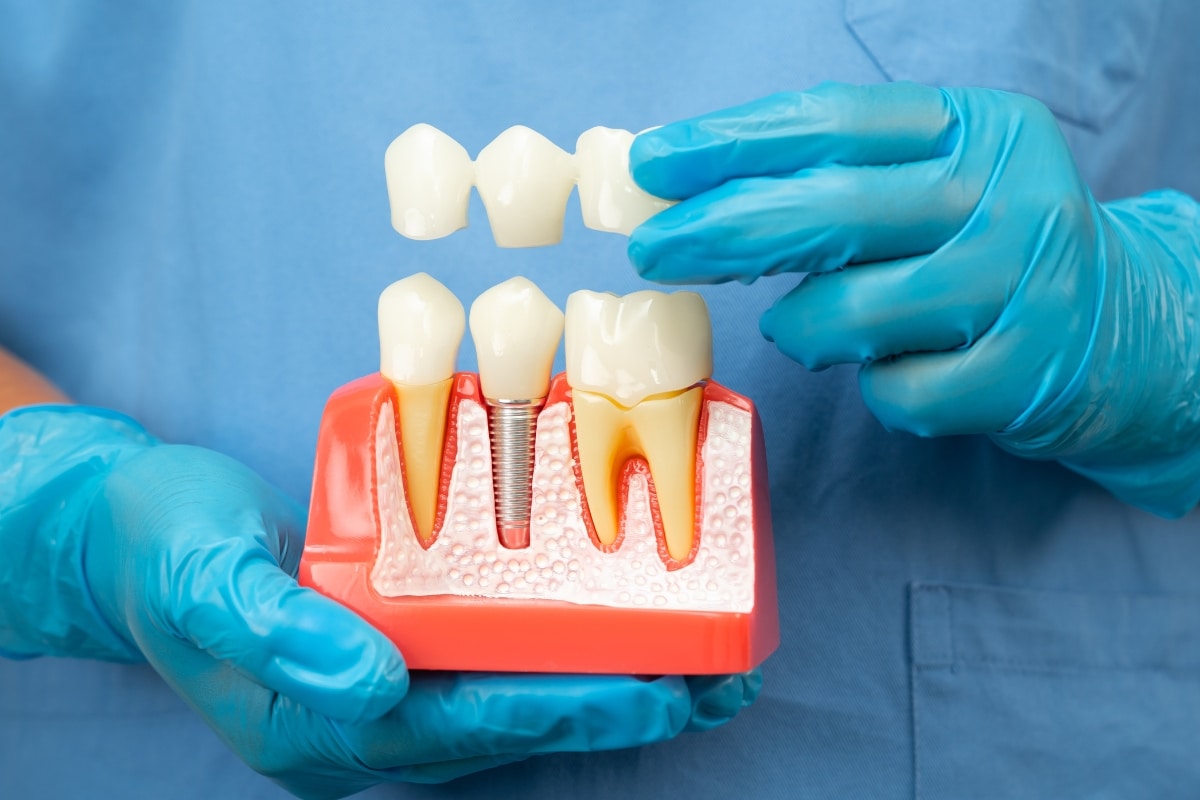
Dental crowns (also called “caps”) are prosthetic restorations that cover a damaged tooth to restore its shape, strength, and function. They’re commonly used when:
- A tooth has a large cavity that can’t be fixed with a regular filling
- A tooth has cracked, broken, or been worn down
- A tooth has had a root canal and needs support
How Well Do Crowns Work?
Research shows strong success for crowns when they’re placed on teeth that have already been treated (like after a root canal). In fact:
- Single crowns on treated teeth have a success rate of about 92% over six years.
That means that in most cases, crowns can preserve the structure of a badly damaged tooth and prevent further decay or fracture.
Dental Crowns Success: What It Means for You
Crowns can extend the life of a compromised tooth, prevent further damage, and restore comfort and chewing ability. But they’re not immune to problems—especially if oral hygiene isn’t maintained or if bite forces are uneven. Regular dental visits and good home care help keep crowns functioning optimally.
Dental Implants: A Permanent Tooth Replacement
When a tooth is beyond repair—or already missing—dental implants are often the gold standard solution.
A dental implant involves:
- A tiny titanium post was surgically placed into the jawbone
- Time for the bone to fuse to the implant (called “osseointegration”)
- A custom crown is attached on top, giving a natural-looking tooth
Implants act and feel more like natural teeth than traditional dentures or bridges.
How Successful Are Implants?
The success and longevity of dental implants are backed by robust data:
- In the U.S., about 3 million people already have dental implants, and roughly 500,000 more are placed each year.
- Long-term studies show implant survival rates of 95% to 98%, making them one of the most reliable tooth replacement options.
- Specifically, implant-supported single crowns have a 5-year survival rate of approximately 96.8%.
Those are impressively high numbers—and they’re why implants are commonly recommended when a natural tooth can’t be saved.
Success vs. Survival: What’s the Difference?
- Survival rate refers to the percentage of implants or crowns that are still in place after a set period (e.g., 5 or 10 years).
- The success rate also takes into account whether complications occurred (such as infection or bone loss).
Even highly successful treatments can have occasional issues, so regular dental checkups are crucial.
When Crowns and Implants Work Together
In many cases, both treatments play a role. For instance:
- A badly cracked tooth might be restored with a crown
- Missing teeth in Scottsdale next to it was replaced with an implant
Studies examining combined restorations (such as dentures supported by both teeth and implants) show high survival and satisfaction when performed properly, with survival rates often above 90% over several years.
Who’s a Candidate for Crowns or Implants?
Dental Crowns might be recommended if:
- A tooth still has sufficient healthy structure
- You want to preserve a natural tooth
Dental Implants may be the best choice if:
- The tooth is non-restorable (broken off at the gumline, severely decayed, etc.).
- You have good bone support or can undergo bone grafting
- You want a fixed, long-term replacement
A dentist or prosthodontist (a specialist in tooth restoration) can assess your situation with exams and imaging.
Aftercare Matters: Keep Your Investment Healthy
Both crowns and implants can last decades with excellent care. That means:
- Brushing twice a day
- Flossing daily (especially around crown margins and implants)
- Regular professional cleanings
- Avoiding habits like hard chewing or teeth grinding
Failing to care for your restoration can increase the risk of decay around crowns or bone loss around implants.
Oral Health and Quality of Life
Severe tooth damage doesn’t just affect chewing or speaking—it can impact confidence, nutrition, and even overall health. Tooth loss is associated with an increased risk of other health problems, underscoring the importance of oral care for well-being.
Conclusion
The data is clear: dental crowns and implants are proven, effective treatments for severe tooth damage and missing teeth. Whether you’re trying to save a beloved natural tooth with a crown or replace a lost one with an implant, modern dentistry offers solutions that deliver excellent long-term results.
While no treatment is perfect for everyone, the science supports these options as some of the strongest tools we have to restore oral health, comfort, and confidence. Talk to your local dentist in Scottsdale to explore what’s best for your smile.
Frequently Asked Questions
- What’s the difference between a crown and an implant?
A crown covers and strengthens an existing tooth, while an implant replaces a completely missing tooth by anchoring into the jawbone. - Do implants hurt?
Most patients report only mild discomfort during implant surgery, and modern anesthesia keeps it manageable. Your dentist will guide you through pain management. - How long do crowns and implants last?
With proper care, crowns can last 10–15 years or more, and implants often last decades, sometimes even a lifetime. - Are there age limits for implants?
Healthy adults of most ages can get implants. Bone health and overall medical conditions are more important factors than age alone. - Are these treatments covered by dental insurance?
Coverage varies. Crowns are often partially covered; implants sometimes less so. Check your plan and ask your provider for cost and financing options.