
Have you been living with a missing tooth for months—or even years—and assumed that it is simply too late for a dental implant? If so, you may have more options than you realize.
Maybe you lost a tooth because of severe decay, gum disease, an accident, or an extraction. Perhaps you’re wondering whether the bone beneath the missing tooth has changed too much. Or maybe you were told years ago that you didn’t have enough bone for an implant and you’re curious whether modern dentistry offers another solution.
The short answer is yes —many people can get dental implants after tooth loss, even when the tooth has been missing for a long time. However, candidacy isn’t determined simply by how long you’ve been missing a tooth. Your dentist or implant specialist will need to evaluate your jawbone, gums, overall oral health, medical history, and the condition of the proposed implant site.
Tooth loss is still common in the United States. According to the National Institute of Dental and Craniofacial Research (NIDCR), adults ages 20 to 64 have an average of about 26 permanent teeth remaining out of 32. In contrast, approximately 2% have no remaining natural teeth. Among adults aged 65 and older, the average is about 21 remaining teeth, and approximately 15% have no natural teeth.
So, if you’re missing one or more teeth, you’re certainly not alone. The bigger question is: Can an implant still work for you?
Let’s explore what happens after tooth loss, how long you may need to wait, why bone loss matters, and what options can make dental implants possible.
Can You Get a Dental Implant Years After Losing a Tooth?
In many cases, yes.
A missing tooth does not automatically disqualify you from receiving a dental implant. Some people receive an implant relatively soon after extraction, while others wait months or years before replacing a missing tooth.
The key issue is the condition of the bone and soft tissues where the implant would be placed.
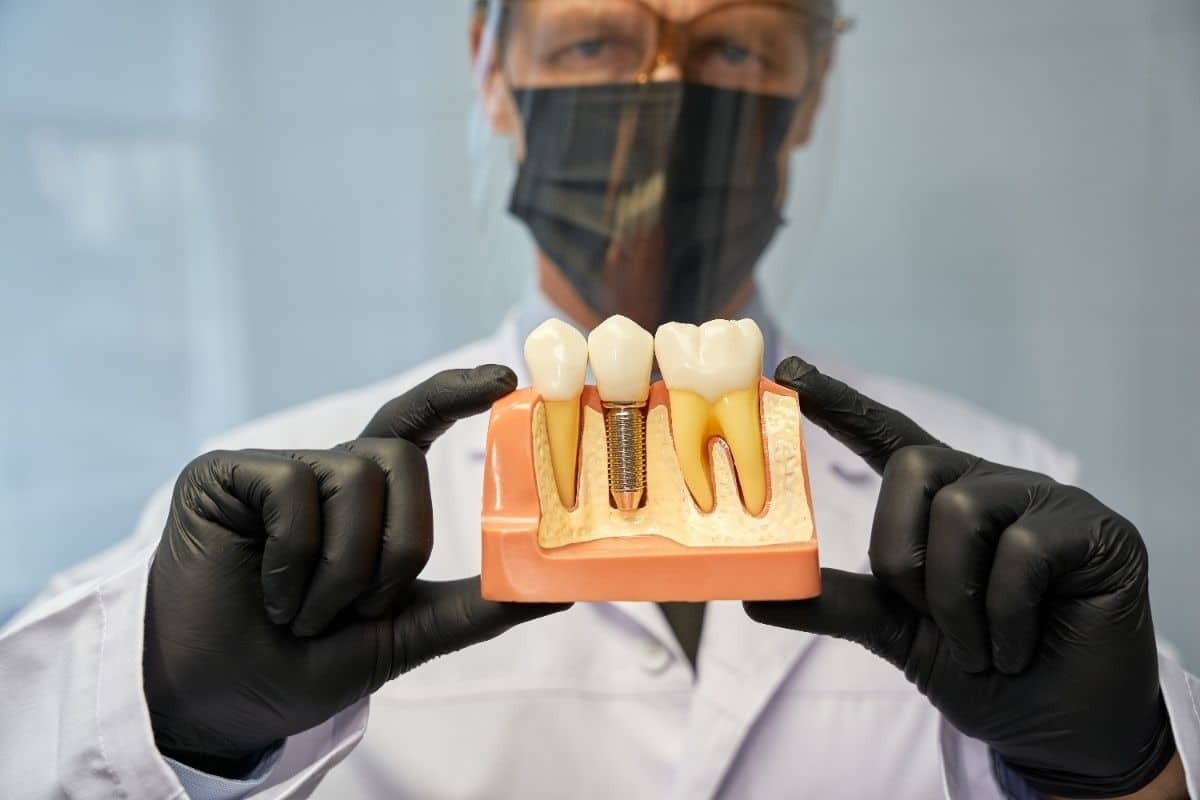
A dental implant is surgically positioned in the jawbone and acts as an artificial tooth root. Once the implant integrates with the surrounding bone, it can support a dental crown, bridge, or denture restoration.
The NIDCR notes that dental implants have become increasingly common among older adults, with the proportion receiving implants increasing fourfold over the past 20 years.
That growth reflects how implant dentistry has become an established approach to replacing missing teeth.
What Happens to Your Jawbone After Tooth Loss?
Here’s an important part of the story that many patients don’t realize:
Your jawbone needs stimulation from tooth roots to maintain its structure.
When a tooth is lost, that stimulation disappears. Over time, the bone in the area can shrink or change shape.
The amount of bone loss varies from person to person. It can depend on factors such as:
- How long the tooth has been missing
- The cause of tooth loss
- Previous infection
- Gum health
- Bone density
- Location of the missing tooth
- Previous dental procedures
- Individual healing characteristics
This is why a dentist can’t determine implant candidacy simply by looking at the space where your tooth used to be.
Imaging—often including 3D imaging when appropriate—can help the dental team evaluate the available bone and surrounding anatomy.
Does Bone Loss Mean You Can’t Get Dental Implants?
Not necessarily.
This is one of the most important misconceptions about dental implants.
If you’ve experienced bone loss, your dentist may recommend bone grafting before or during implant treatment.
Bone grafting involves placing bone or bone-substitute material in an area where additional volume is needed. The goal is to create a more suitable foundation for an implant.
The American Dental Association’s current coding guidance includes procedures for bone grafting performed at the time of implant placement and for repairing defects around existing implants, reflecting how bone-related procedures can be incorporated into implant treatment.
Depending on your anatomy, your dentist may recommend:
- Bone grafting
- Ridge augmentation
- Sinus augmentation for certain upper-jaw cases
- Soft-tissue grafting
- A combination of procedures
Not every patient needs these additional treatments.
Your dental imaging and examination determine whether they’re appropriate.
Why Does the Cause of Tooth Loss Matter?
The cause of tooth loss can affect your implant treatment plan.
Tooth loss from decay
If severe decay resulted in extraction, your dentist will want to make sure active infection or untreated decay elsewhere isn’t compromising your oral health.
NIDCR reports that 1 in 5 U.S. adults ages 20 to 64 had untreated tooth decay during the 2017–March 2020 survey period.
Tooth loss from gum disease
If periodontal disease contributed to tooth loss, controlling the disease is especially important before implant placement.
NIDCR identifies periodontal disease as the most common cause of tooth loss among adults.
An implant doesn’t eliminate the need to care for your gums. Patients with a history of periodontal disease may need ongoing periodontal maintenance and careful monitoring.
Tooth loss from an accident
Trauma may leave behind changes in the bone or soft tissue that affect implant placement.
Tooth loss after extraction
Sometimes an implant can be placed soon after an extraction, but immediate placement isn’t appropriate for everyone.
Your dentist will evaluate the socket, bone, infection status, gum tissue, and implant stability before deciding on timing.
How Long Should You Wait After Losing a Tooth?
There isn’t one universal waiting period.
Some patients may be candidates for immediate implant placement, while others need to wait for extraction-site healing or undergo bone grafting first.
Your treatment timeline may depend on:
- Whether the tooth is still present
- Whether infection is present
- The condition of the socket
- The amount of available bone
- Gum-tissue health
- Whether bone grafting is necessary
- Your overall health and healing ability
- The type of restoration planned
Research summarized by the ADA has compared immediate and delayed implant placement and found differences in crestal bone healing between approaches, illustrating why implant timing needs to be individualized rather than treated as a one-size-fits-all decision.
If you’ve been missing a tooth for years, that doesn’t necessarily mean you’ve missed your opportunity. It simply means your dentist needs to evaluate what the site looks like today.
What If You Don’t Have Enough Bone?
If your jawbone isn’t thick or tall enough for predictable implant placement, your dentist may recommend bone augmentation.
The procedure can involve placing graft material into the deficient area and allowing time for healing.
The goal is not necessarily to recreate the jaw exactly as it was before tooth loss. Instead, the objective is to develop an adequate foundation for the planned implant.
In some cases, the implant and graft can be performed during the same surgical appointment. In other cases, bone augmentation must heal before implant placement.
The timeline depends heavily on the individual case.
Can You Get Dental Implants After Wearing Dentures?
Yes, wearing dentures does not automatically prevent you from receiving implants.
In fact, implants can sometimes help stabilize certain types of dentures.
For someone who has lost many or all teeth, treatment options may include:
- Individual dental implants
- Implant-supported bridges
- Implant-retained dentures
- Full-arch implant restorations
The appropriate option depends on the amount of available bone, overall oral health, functional needs, and treatment goals.
A person missing one tooth has a very different treatment plan from someone who has been missing all of their teeth for many years.
Are Dental Implants an Option for Older Adults?
Age alone does not automatically rule out dental implants.
This is particularly relevant because tooth loss becomes more common as people get older. NIDCR reports that adults age 65 and older have an average of 21 remaining natural teeth, compared with 26 among adults ages 20–64. About 15% of seniors have no remaining natural teeth.
However, age is only one part of the evaluation.
Your dentist may consider:
- Bone quality
- Gum health
- Medical conditions
- Medications
- Oral hygiene
- Smoking status
- Healing capacity
- Ability to maintain the implant long-term
The goal is to determine whether implant treatment is appropriate for you, rather than using age as the sole deciding factor.
What Does the Dental Implant Process Look Like After Tooth Loss?
While every case differs, the process often follows several stages.
Step 1: Comprehensive evaluation
Your dentist examines your teeth, gums, bite, jawbone, and medical history.
Step 2: Diagnostic imaging
Imaging helps determine bone availability and the location of important anatomical structures.
Step 3: Treatment planning
Your dentist determines whether you need an implant alone or additional procedures such as bone grafting.
Step 4: Site preparation
If necessary, bone or soft-tissue augmentation may be performed before implant placement.
Step 5: Implant placement
The implant is surgically positioned in the jawbone.
Step 6: Healing and integration
The implant needs time to integrate with surrounding bone.
NIDCR describes successful integration with the underlying bone and tissue as an important factor in implant function.
Step 7: Restoration
Once the implant site is ready, your dentist attaches the appropriate restoration, such as a crown, bridge, or denture.
How Long Does the Entire Process Take?
This is one of the most common questions patients ask.
Unfortunately, there isn’t a single number that applies to everyone.
A straightforward case may involve fewer stages, while someone with significant bone loss may require additional healing time.
Your treatment could involve:
- Extraction
- Bone grafting
- Healing
- Implant placement
- Implant integration
- Abutment placement
- Final crown or restoration
If you’re replacing a tooth that has been missing for several years, don’t be surprised if your dentist recommends additional imaging or preparatory treatment.
The extra planning isn’t necessarily a sign that something is wrong. It’s often about creating a predictable foundation for the implant.
Do Dental Implants Look Like Natural Teeth?
When properly planned and restored, dental implants can be designed to resemble natural teeth closely.
The implant itself sits below the gumline and functions as the artificial root. The visible portion is the restoration placed above it.
Your dentist considers factors such as:
- Tooth color
- Shape
- Size
- Gum contours
- Bite
- Neighboring teeth
- Position within your smile
For front teeth, cosmetic planning can be especially important because even small differences in tooth shape or gum position may be noticeable.
What Are the Benefits of Dental Implants After Tooth Loss?
Dental implants can offer several potential advantages compared with removable tooth-replacement options.
They replace the tooth root
Unlike a traditional bridge, an implant is anchored into the jawbone.
They can restore chewing function.
A properly planned implant restoration can help restore everyday oral function.
They can support different restorations.
Implants may support individual crowns, bridges, or implant-supported dentures depending on the treatment plan.
They can help preserve the implant site.
Because an implant occupies the space where a tooth root would normally be, it can stimulate the surrounding bone after successful integration.
They don’t require removing a removable appliance.
For eligible patients, implants can provide a fixed tooth-replacement option.
However, dental implants aren’t automatically the best choice for everyone. A thorough evaluation should compare implants with bridges, dentures, and other alternatives.
What Can Make Someone a Poor Candidate for Dental Implants?
Certain circumstances may require additional treatment or make implants less appropriate.
Examples can include:
- Uncontrolled gum disease
- Insufficient bone without a willingness or ability to undergo grafting
- Certain medical conditions affecting healing
- Poor oral hygiene
- Heavy tobacco use
- Inadequate space for the planned restoration
- Certain medications or treatments
This doesn’t necessarily mean that an implant is impossible.
It may mean that another dental problem needs to be addressed first.
For example, if periodontal disease is active, controlling the disease may be an important step before implant placement.
How Should You Care for Dental Implants?
Here’s an important point:
Dental implants don’t mean you can stop caring for your mouth.
You still need regular dental care.
Your dentist may recommend:
- Brushing twice daily
- Cleaning between teeth and around implants
- Professional dental cleanings
- Periodontal maintenance when needed
- Regular implant evaluations
- Avoiding tobacco
- Addressing teeth grinding if present
Although the implant itself cannot develop a traditional cavity, the surrounding gum and bone can still be affected by inflammation and disease.
Long-term maintenance is therefore part of successful implant treatment.
Conclusion
Yes, you can often get dental implants after tooth loss—even if you’ve been missing a tooth for years.
The length of time you’ve been without a tooth is only one piece of the puzzle. Your dentist needs to evaluate your jawbone, gum health, bite, medical history, and the condition of the implant site.
If you’ve experienced bone loss, that doesn’t necessarily close the door on implants. Bone grafting and other preparatory procedures may help create the foundation needed for treatment.
With nearly 2% of U.S. adults ages 20–64 having no remaining natural teeth and approximately 15% of adults 65 and older experiencing complete tooth loss, tooth replacement remains an important part of modern dental care.
If you’ve been putting off replacing a missing tooth because you think it’s “too late,” schedule an evaluation with a qualified dental professional. You may have more treatment options than you expect.
Frequently Asked Questions
- Can you get a dental implant years after losing a tooth?
Yes. Many patients can receive dental implants years after tooth loss. However, prolonged tooth loss may be associated with changes in the jawbone, so your dentist may recommend imaging and possibly bone grafting before implant placement.
- What if I have bone loss after losing a tooth?
Bone loss does not automatically prevent implant treatment. Depending on the amount and location of bone loss, your dentist may recommend bone grafting or another augmentation procedure to create a suitable foundation for the implant.
- Can older adults get dental implants?
Yes. Age alone isn’t necessarily a reason to rule out dental implants. Your overall health, bone condition, gum health, medications, oral hygiene, and ability to maintain the restoration are more important factors to evaluate.
- How long after tooth loss can you get an implant?
There is no universal waiting period. Some implants can be placed soon after extraction, while others require waiting for healing or undergoing bone grafting first. The appropriate timing depends on your individual dental condition.
- Are dental implants better than dentures?
Neither option is automatically better for every patient. Dental implants can provide a fixed solution and may support crowns, bridges, or dentures. In contrast, traditional dentures may be appropriate for patients who aren’t candidates for implants or who prefer a removable option. Your dentist can compare the choices based on your oral health, goals, and budget.